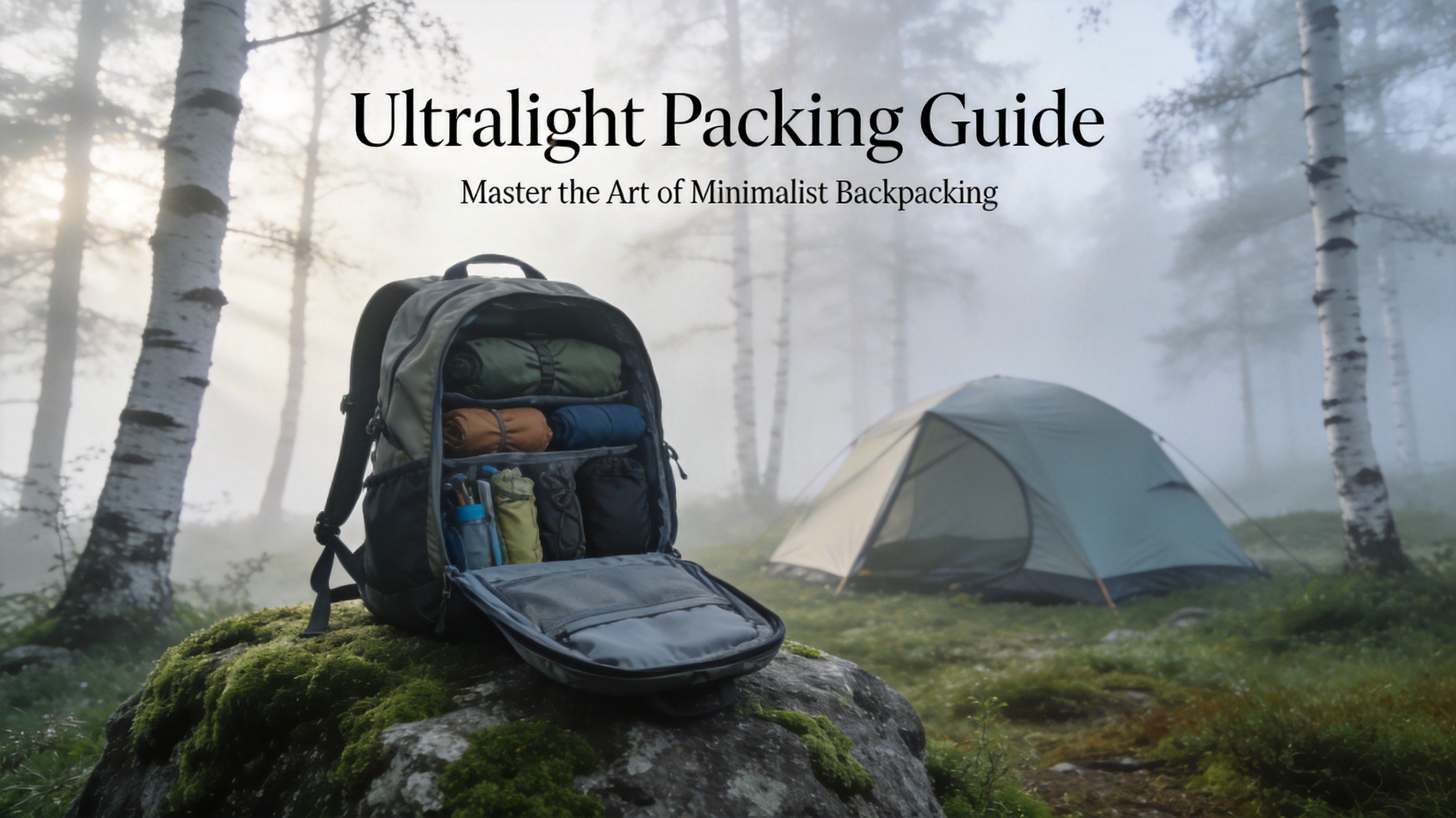

The philosophy of ultralight backpacking has transformed how outdoor enthusiasts approach multi-day hikes. By reducing your base weight below 10 kg, you move faster, experience less fatigue, and actually enjoy the journey instead of enduring it.
What Is Base Weight?
Base weight is everything in your pack minus food, water, and fuel. The three tiers:
- Traditional: 15+ kg — you’ll feel every step
- Lightweight: 7–15 kg — a balanced approach
- Ultralight: Under 7 kg — freedom on the trail
Shelter: The Biggest Opportunity
Your tent is often the heaviest item. Switching to a trekking-pole tent paired with lightweight aluminum stakes can drop 1–2 kg instantly. Modern single-wall shelters with DCF fabric weigh under 500g.
Cookware: Simplify Your Kitchen
A titanium mug, a spork, and a canister stove with a windscreen is all you need. The windscreen alone improves fuel efficiency by up to 50%, meaning you carry less gas. Skip the full cookset — boil-in-bag meals work perfectly.
Lighting: Go Rechargeable
A rechargeable headlamp eliminates disposable batteries. At under 60g with 200+ lumens, it outperforms heavy flashlights while weighing a fraction. Charge via the same USB-C cable as your phone.
Clothing: The Layer System
One base layer, one mid-layer, one shell. That’s the formula. Merino wool base layers resist odor for days, and a lightweight windshell handles 80% of European conditions without the weight of a full rain jacket.
The Multipurpose Rule
Every item should serve at least two purposes. Your dry bag becomes a pillow. Your buff is a hat, neck gaiter, and pot holder. Carabiner clips hold your lantern, secure gear, and rig a clothesline.
Key Takeaways
- Weigh everything — surprises hide in your pack
- Replace batteries with USB-rechargeable alternatives
- Choose multi-use items over single-purpose gear
- Test your kit on a short trip before committing to a thru-hike
Ultralight isn’t about suffering — it’s about intentionality. Every item earns its place. Browse ultralight camping gear →